Change Management Guide
Change is hard everywhere. At Founder to Leader, we believe that most people are fairly anxious most of the time. Even though early-stage start-ups tend to attract talent that is more comfortable with change, there is much that a leadership team can do to ensure that change happens smoothly. When you anticipate change coming up, you want to try to plant the seeds of change so that the idea begins as a soft whisper and eventually becomes loud enough that everyone hears it. The idea is that people will have time to adjust to this change before it’s implemented - and those who may be “resistors” will have an opportunity to share concerns before any changes are official.
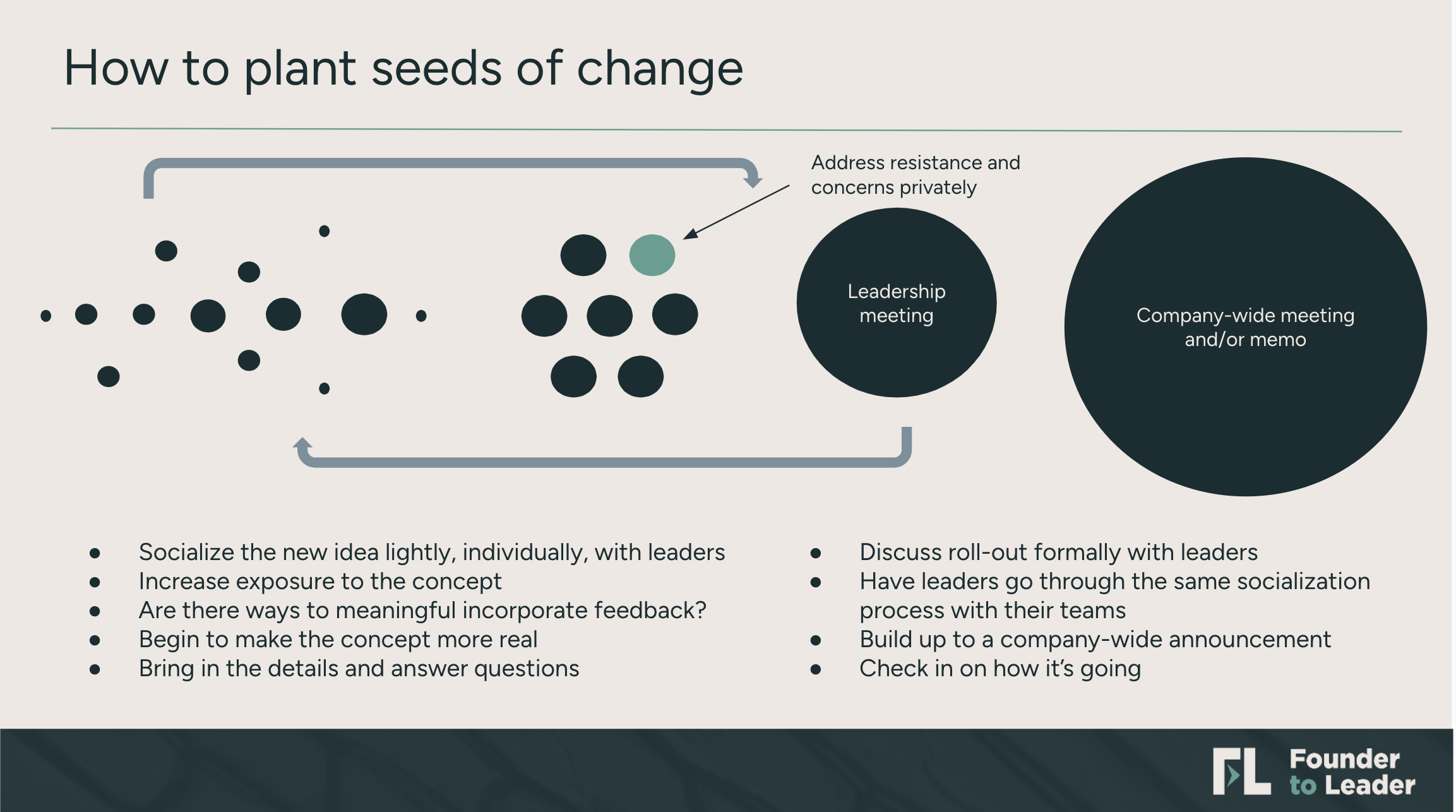
What sorts of things require change management plans? Many of the things that happen often in an early-stage start-up. People coming, people leaving, role changes, new processes, new systems, updates to benefits or policies, strategic vision-setting, and new company values are all examples that can benefit from change management. It is important to start leaving breadcrumbs to all stakeholders as soon as you have the conviction that a change is coming so that your team is warming up to the impermanence of the moment.
If you are pressed for time, try not to skip these change management steps - just aim to accelerate them:
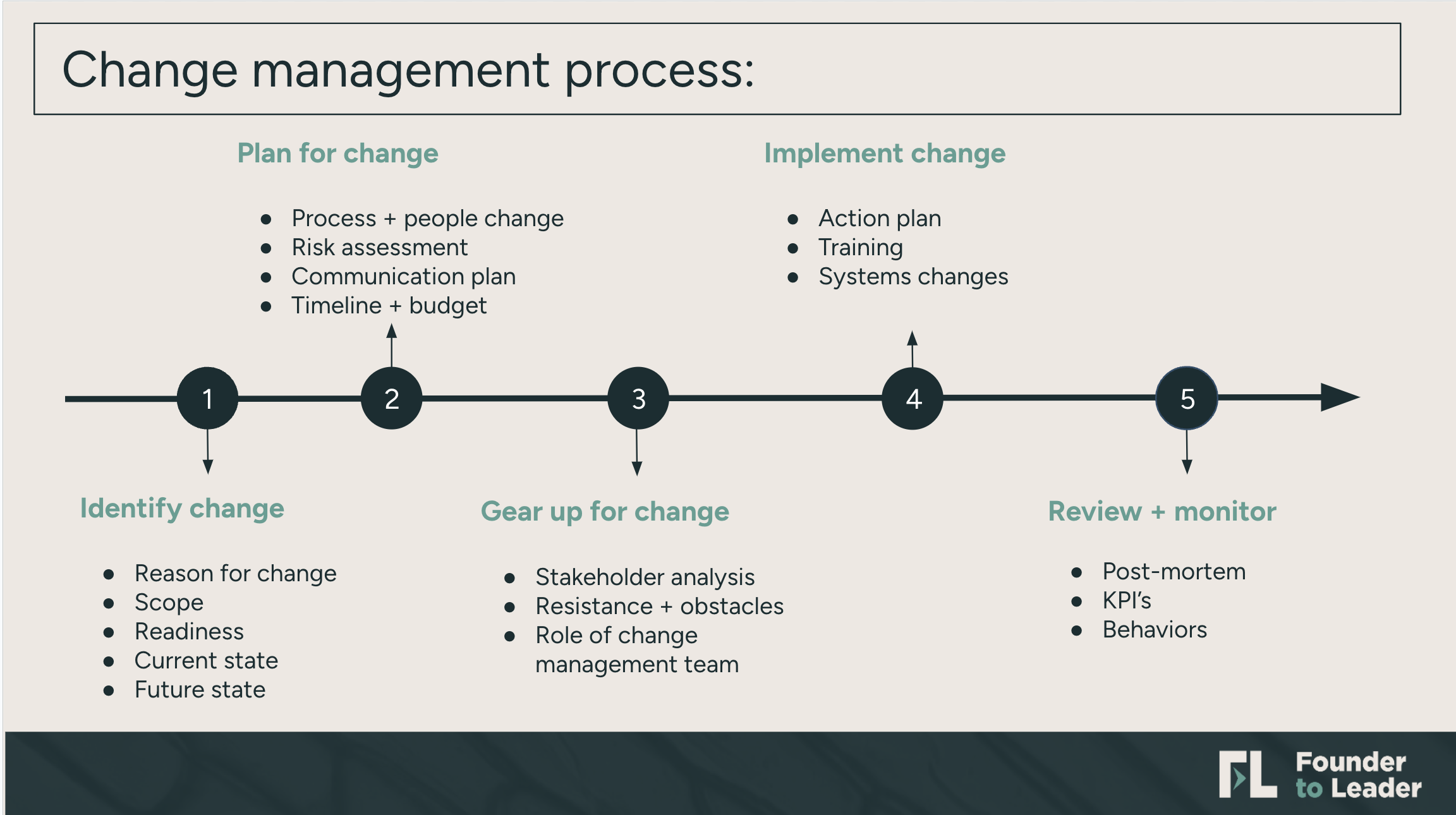
STAGES OF CHANGE MANAGEMENT
1. Identify the Change
Reason for Change: Identify why we need to change and be able to articulate it
Scope: Do you have a big-picture sense of what it’s going to take to achieve this change?
Readiness: How ready is your team to take this on? When will they be ready?
Current State: Take stock of where you are; how far are you from your change goal?
Future State: Visualize and describe what post-change looks like in detail.
2. Plan for Change
Process + People Change: What processes or people need to change to achieve your goal?
Risk Assessment: Identify risks that this change may introduce to the company.
Communication Olan: Design a vision of the future and make a plan to roll it out in stages to all relevant stakeholders.
Timeline + Budget: Create a timeline and budget to keep you on track toward your goal.
3. Gear Up for Change
Stakeholder Analysis: Identify stakeholder hopes and fears and make a plan for each type.
Resistance + Obstacles: Who (or what) will be your big obstacles? How will you overcome these obstacles?
Role of the Change Management Team: Who are your champions and how will you use them?
Create a Sense of Urgency: Why now? Can you explain that?
4. Implement Change
Action Plan: What needs to happen when? Who will do what?
Training: Does anyone need to receive training to be able to make this change?
Systems Changes: Do any systems need to be modified for this change to be sustained?
Create Short-Term Wins: Find bright spots and share them to build momentum.
5. Review and Monitor Change
Post-Mortem: Reflect on how the change went. What can we learn?
Make More Changes: Do you need to continue iterative to achieve your goals?
KPIs: What indicators of success are we measuring?
Behaviors: What behaviors have we noticed since implementing the change?
Institutionalize Successes: Whatever works, figure out how to make it last.