
Common startup organizational structures
Adapted from Hubspot’s Illustrated Guide to Organizational Structures + Design
There are only a few organizational structures that are common in early stage Tough Tech startups. When teams are less than ten people, they typically have a functional organizational structure - with folks operating as clusters based on their expertise. As the team, grows, however, your team will likely evolve into a matrix structure. These are both vertical and horizontal structures that work well cross-disciplinary teams.
Regardless of what model you choose, there are a few frameworks to think about as you decide on the optimal structure:
Organizational structure design should be driven by business goals, not by individuals.
Reporting chains are about decision-making. Think of organizational design as a way of answering the question whose vote should count in a tie.
Organizational design should reflect optimal communication patterns - how you want information to flow throughout the company.
Functional - or Vertical - Organizational Structures
Functional organizational structures can be organized by division, process, or geography - however it makes the most sense for your business goals.
Pros: People with the same skills and expertise work and learn from each other
Cons: Major silos, gaps in communication across teams and divisions
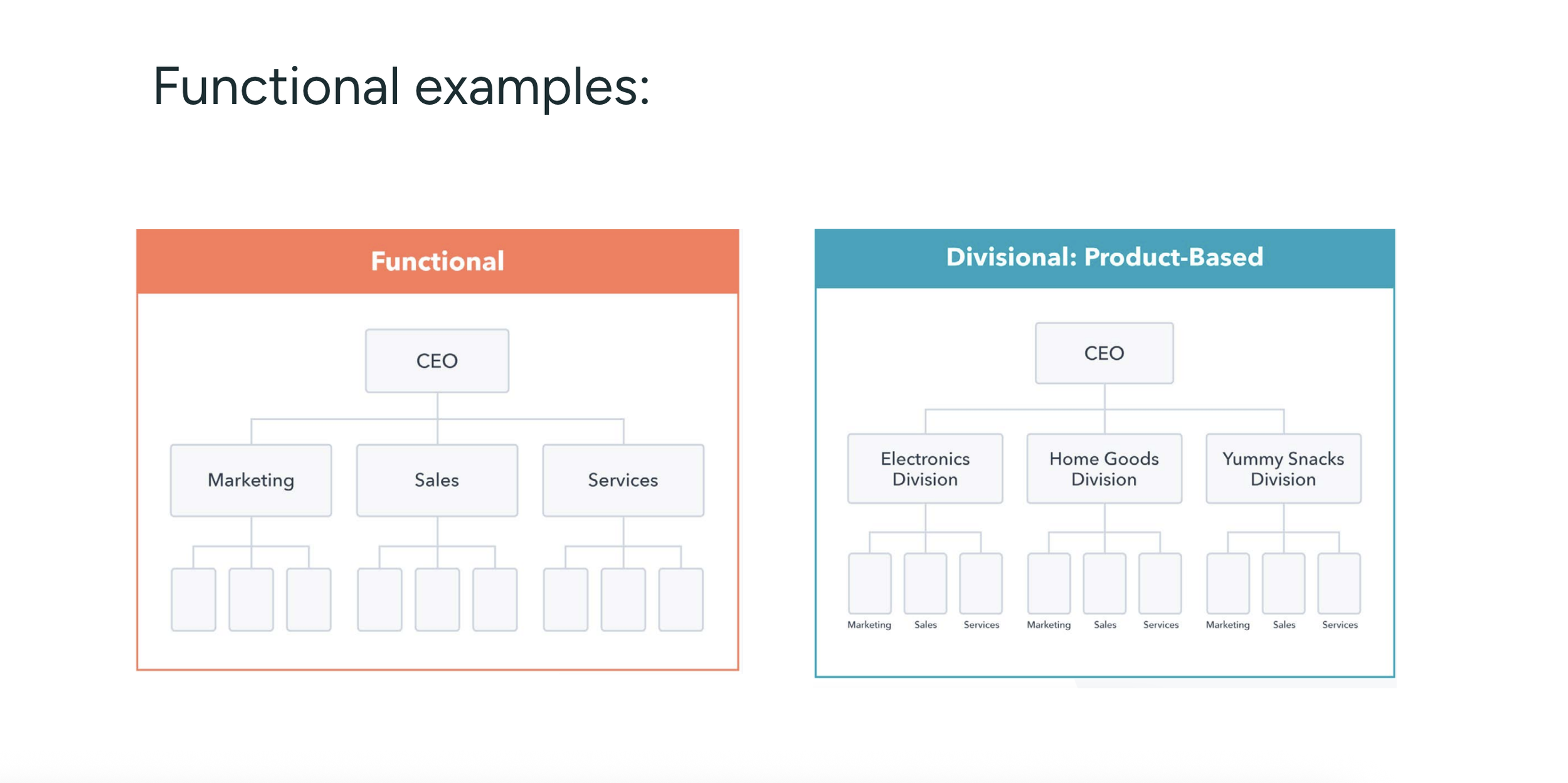
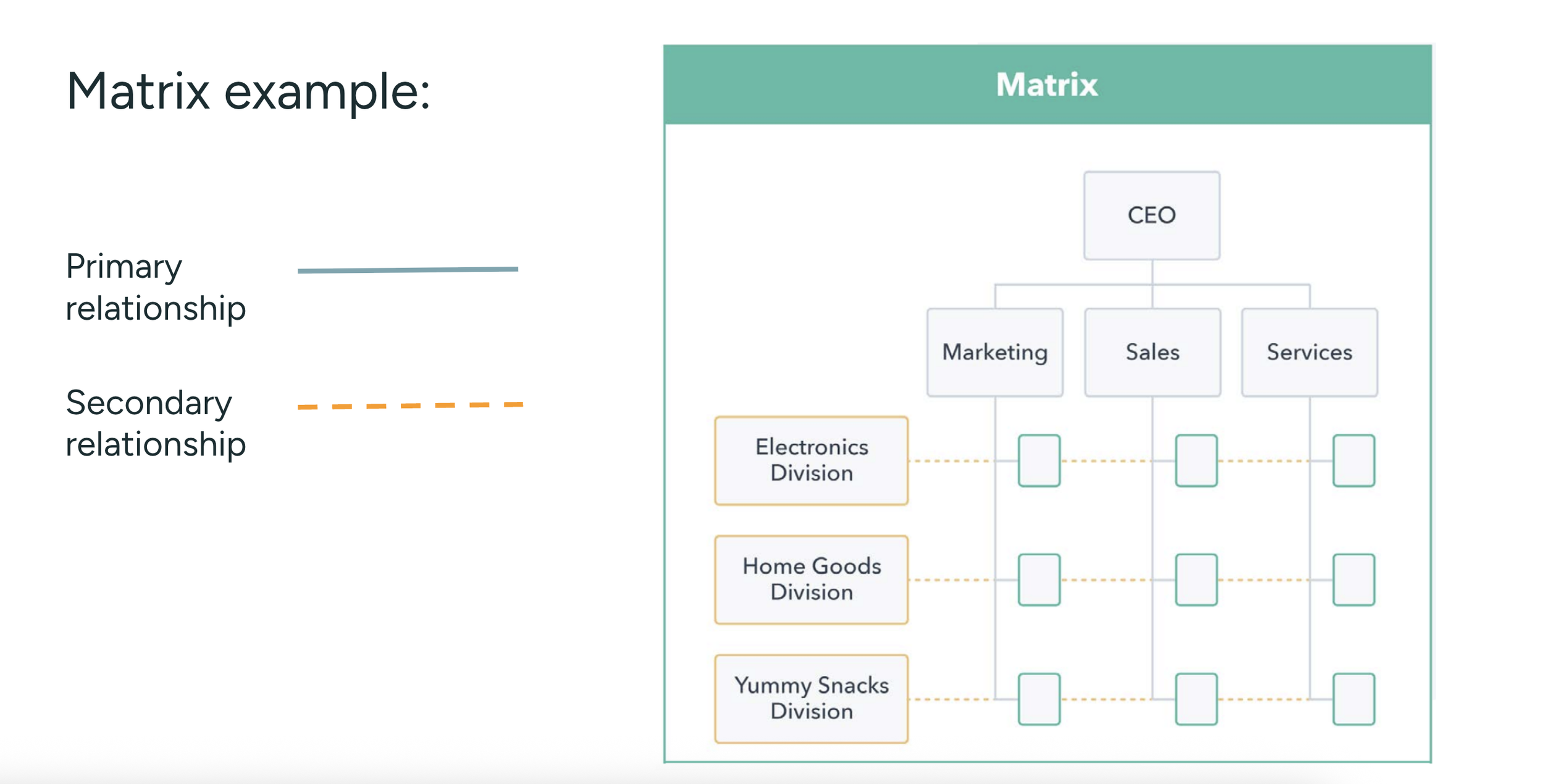
Matrix Organizational Structures:
In a matrix structure, employees may have two managers. They have a primary point person who is overall in charge of their performance and growth in the company - as well as a technical lead or project manager who may oversee specific aspects of the employee’s contributions to company goals.
For a matrix to work, employees need to be very clear on who they go to in the company for what and how decisions get made between their two point people.
If there are issues to address with the employee, the project manager needs to go to the primary manager to share feedback so that the primary manager can think holistically about how to support the employee’s success at work.
Pros: Organizational cross-collaboration and optimization of technical talent.
Cons: It takes significantly more clarity and coordination to work effectively and not increase confusion.
As you and your team think about what organizational structure is best for you, try not to overthink the ideal structure for three or even five years from now. Your structure is going to change often over the coming months and years as you raise funds and add more people onto your team. You also may want to consider introducing the idea of two-track career paths early on as well so that folks who aren’t interested in management as a career path, can still grow within your organization.